Activation
Neutral
0.0s
AU12 smile0.08
Brow inner0.12
Jaw open0.06
Lid raise0.18

Research & technology
Soul Machines creates lifelike AI experiences grounded in years of research across avatars, animation, conversational orchestration, and biologically inspired intelligence.
At Soul Machines, our work starts with a simple belief: the most powerful AI experiences are the ones that feel natural to interact with. That means going beyond text alone to create AI that can communicate with presence, personality, expression, and responsiveness.
Our technology foundation is built on long-term research into avatars and the systems that make them possible, from animation and control pipelines to conversation orchestration, simulation, memory, and interactive behavior.
This research continues to shape how we design and build AI experiences that are more expressive, reliable, and natural to interact with.
Our work is supported by patented and proprietary technologies spanning animation, interaction, orchestration, and biologically inspired intelligence.
We bring together science, engineering, and creative technology to build AI that looks more natural, feels more responsive, and connects more meaningfully with people.
01 / Orchestration
Great AI experiences depend on more than generating the right answer. They depend on timing, continuity, interruption handling, and the ability to coordinate multiple systems behind a single, seamless interaction.
Natural conversation is dynamic. People pause, interrupt, switch topics, and expect a response that still feels coherent. Behind the scenes, that requires more than a language model alone.
Our research explores orchestration systems that help manage multiple conversation threads, tools, skills, and backend processes while maintaining continuity for the user. This includes approaches to latency handling, event tracing, state management, and graceful recovery when systems need time to think, fetch, or act.
The result is a stronger foundation for AI experiences that can stay responsive and reliable under real-world conditions, especially in voice, avatar, and multi-system environments.
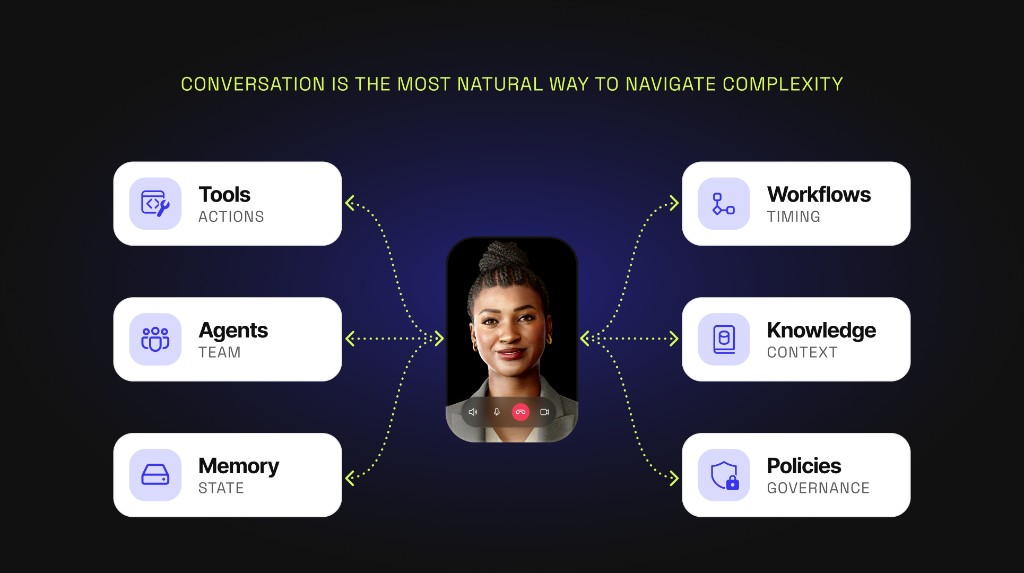
Use conversation to coordinate agents, context, and complex processes through a single interface that feels natural to people and scalable for business.
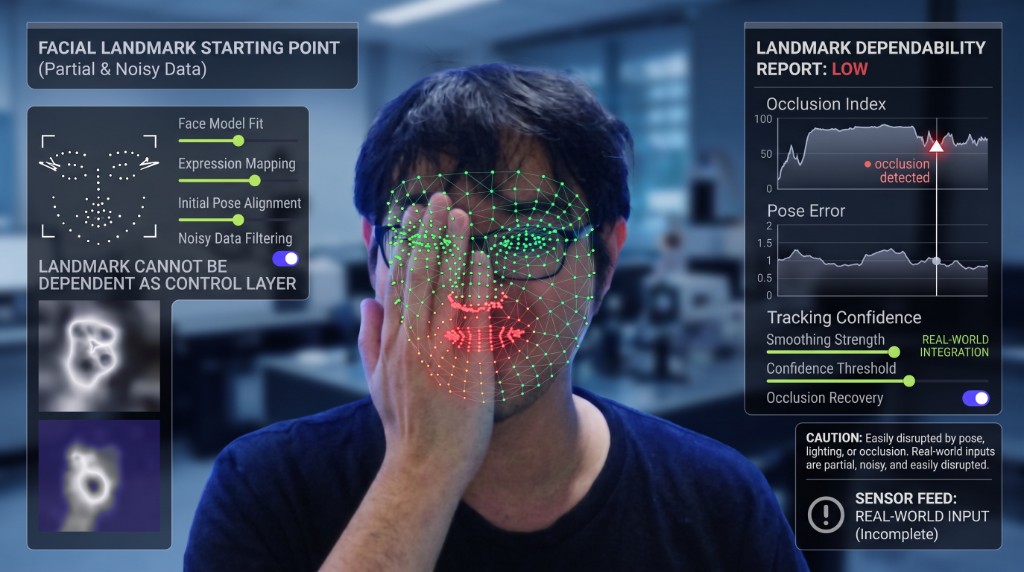
Facial landmarks are a starting point, not a dependable control layer. Real-world inputs are partial, noisy, and easily disrupted by pose, lighting, or occlusion.
02 / Expression Signals
Raw face-tracking data can be noisy and difficult to use at scale. Our research focuses on transforming those inputs into more stable, interpretable signals that can support animation, analytics, and interactive experiences.
Many systems can detect facial landmarks, but turning that data into something reliable is a more complex challenge. Landmark inputs can jitter, drift, or vary across users and environments.
Our work in this area explores ways to map raw geometry into more stable activation channels that are easier to interpret and use downstream. That can support everything from cleaner facial control and expression retargeting to analytics, quality assurance, and anonymized interaction insights.
This area of research is especially important in any experience where facial behavior needs to be translated into expressive digital output without relying on raw facial landmarks alone.
AI becomes more useful when it can coordinate intelligence, express behavior naturally, and stay reliable under real-world conditions.
03 / Simulation
Testing lifelike AI requires more than text transcripts. It requires replayable, structured simulations that connect conversation, behavior, and avatar state over time.
Simulation helps teams explore how AI systems behave across different scenarios before deployment. But for avatars, useful simulation goes beyond text-only dialogue.
Our research looks at structured, replayable interaction traces that connect conversation state with avatar behavior, memory, scene context, and 3D outcomes. This creates a richer foundation for evaluation, experimentation, and improvement.
By making interactions more traceable and repeatable, simulation can support better testing, clearer debugging, and more confident iteration across both conversational and embodied AI systems.
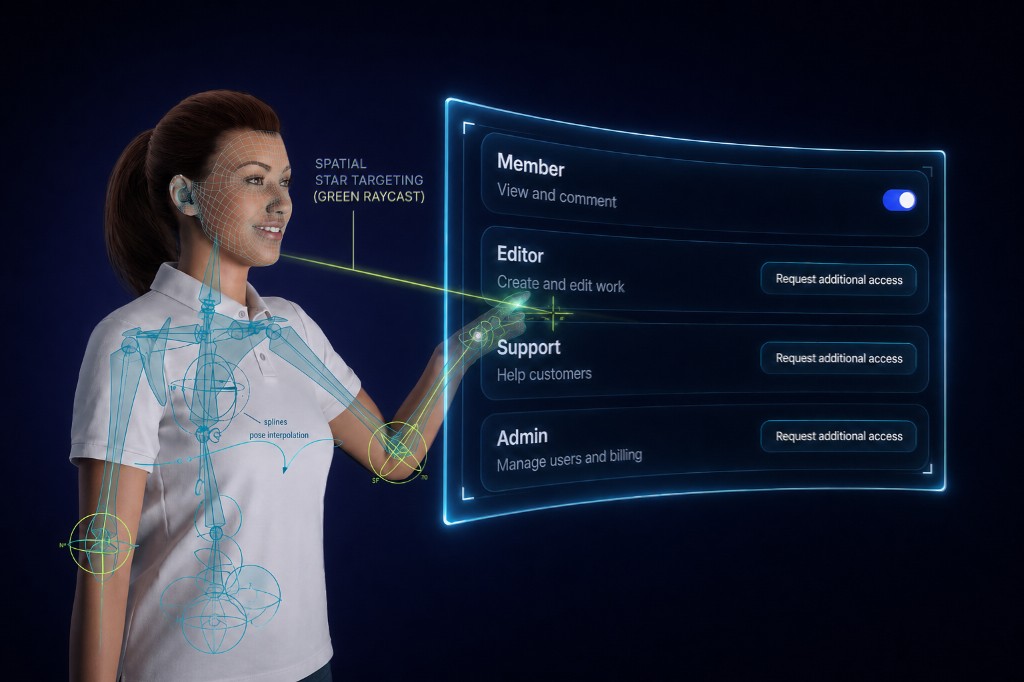
Users speak spatially. Soul Machines enables avatars to understand, reference, and act within a shared environment.
04 / Spatial Interaction
As AI moves beyond screens and into immersive environments, it needs more than language alone. It needs a shared understanding of space, objects, and context to guide, respond, and act more clearly.
In virtual and mixed reality environments, people communicate spatially, referring to objects, locations, and actions in a shared scene. Without a common spatial frame of reference, those interactions can quickly become ambiguous.
Our research explores systems that align machine perception and response within the same 3D environment as the user. By grounding interaction in shared coordinates, object references, and continuous feedback loops, AI can point, assist, and respond with more clarity and precision.
This creates a stronger foundation for task assistance in virtual spaces, making interactions more visible, verifiable, and easier to interpret over time.
When language, perception, memory, and action operate in the same loop, digital agents can move from conversation into embodied, observable interaction.
05 / Embodied AI
When AI moves into the physical world, reliability depends on more than motion. It depends on coordination, memory, adaptation, and the ability to respond safely in changing environments.
Embodied systems need to integrate perception, decision-making, internal state, and action under real-world timing constraints. They also need ways to manage interruptions, handle novelty, and maintain governed memory over time.
Our research in this area explores system architectures that support modular coordination, explicit state handling, replayable memory, and interpretable action within shared environments.
While robotics introduces its own deployment and safety requirements, these research foundations reflect a broader focus at Soul Machines: building AI systems that can operate with more continuity, clarity, and adaptability in the world around them.
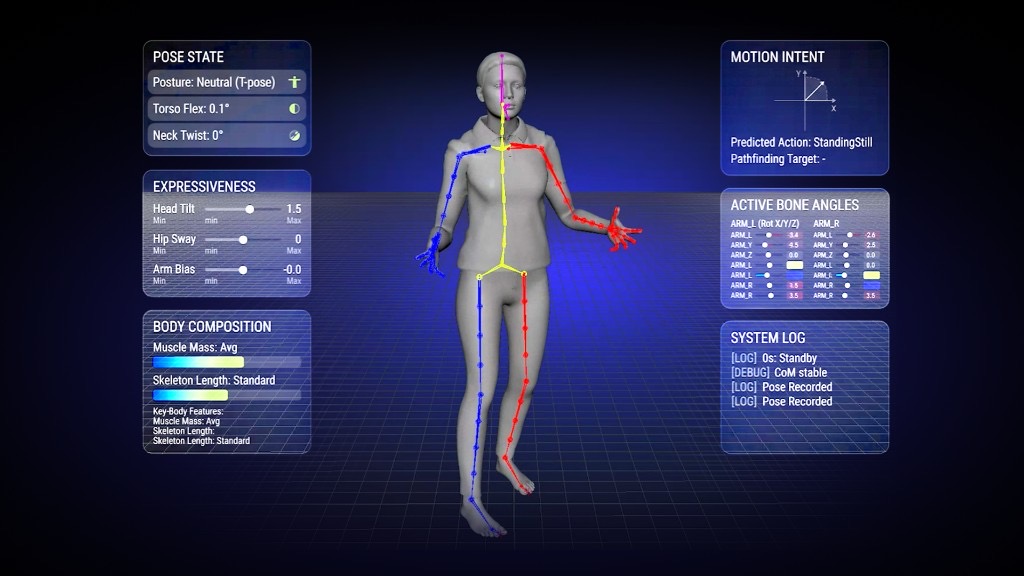
Human motion can be translated into an explicit body representation, making posture, intent, and action easier to interpret, reuse, and debug.
06 / Animation Readiness
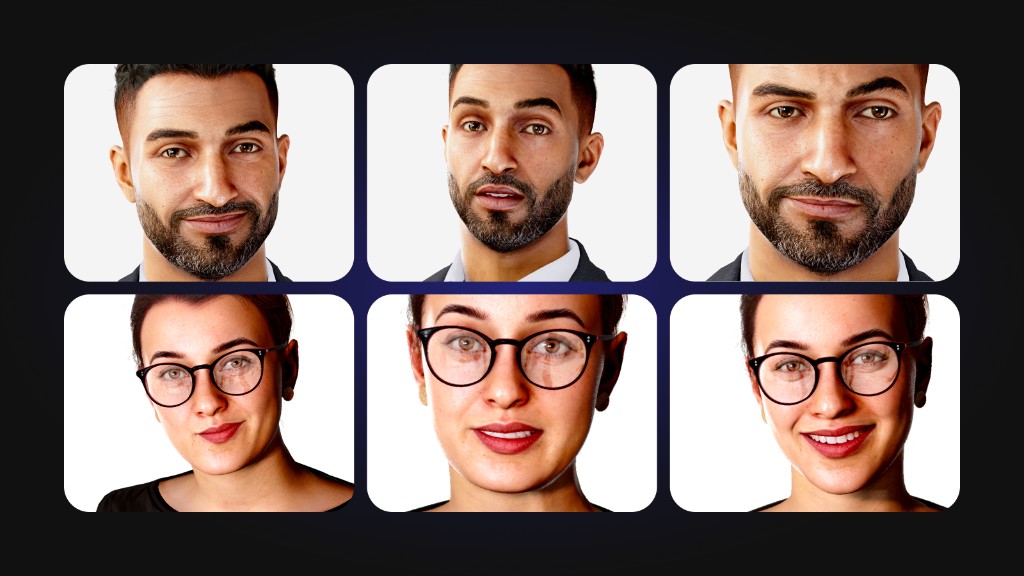
A believable avatar needs to do more than look good in a still frame. It needs to speak, emote, and animate reliably across many identities and use cases.
One of the biggest challenges in avatar creation appears after the avatar is made: can it animate consistently under real workloads?
Our research focuses on building avatar systems with downstream performance in mind. That includes expression compatibility, speech animation, retargeting stability, and combination behaviors that remain coherent across a wide range of identities.
By treating animation readiness as a design goal from the start, we can support more scalable, production-ready avatar experiences, reducing the need for constant manual correction and enabling more consistent expressive performance.
Early access
We’re opening early access with a small number of teams.
Tell us where to reach you, we’ll bring an avatar to your next call.